Orange Street: A Rounded Sans Serif Font for Handmade Brands
If you’ve ever spent hours tweaking a label, re-cutting vinyl because the letters didn’t hold up on your Cricut, or second-guessing whether your wedding welcome sign feels warm *and* polished—you know how much a single font can shape how people experience your work. That’s why Orange Street landed in my cart and never left my go-to folder. It’s not just another all-caps sans serif font—it’s a thoughtfully built design tool made for makers who sell real things to real people.
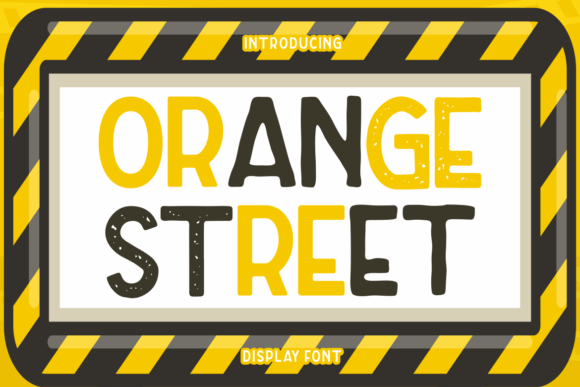
Orange Street is a rounded modern sans serif typeface with a friendly, confident presence. Its curves are soft but intentional—not bubbly, not stiff—just right for conveying approachability without sacrificing clarity. The clean version gives crisp, consistent lines perfect for product tags and digital printables. The rough version adds subtle organic variation that breathes life into farmhouse signs, hand-poured candle labels, or rustic wedding stationery. And the textured version? That’s your secret weapon for vintage-style tote bags, enamel pin mockups, or seasonal SVG bundles where tactile authenticity matters.
I use Orange Street across nearly every physical product I make: from 1-inch sticker sheets for planners to 24-inch wooden welcome boards for bridal clients. Its all-caps structure means it shines at display sizes—think “OPEN” signs in boutique windows or “GIFT WITH PURCHASE” banners on Etsy listing mockups. But don’t assume it’s only for headlines. Because of its generous x-height and open counters, even small-print applications like ingredient lists on soap labels or size charts on garment tags stay legible when scaled down to 8–10pt in print.
For Cricut and Silhouette users, Orange Street cuts cleanly in the clean version—no fragile serifs or thin joins to snap mid-cut. I’ve run it through my Explore Air 3 on matte vinyl, heat-transfer vinyl, and cardstock without hesitation. With the rough and textured variants, I recommend using them at larger sizes (16pt and up) and adjusting cut settings slightly—slower speed, deeper blade—for best results on intricate edges.
What makes Orange Street especially valuable for commercial crafters is how easily it supports brand consistency. Whether you’re designing a full suite—invitation + menu + seating chart—or building a cohesive printable collection (monthly planner pages, habit trackers, gratitude journals), switching between the three versions lets you maintain visual harmony while adding subtle hierarchy. Use clean for body text or fine details, rough for section headers, and textured for cover titles or social media graphics. It’s the same voice, just different tones.
Real examples from my shop: a lavender-scented candle line uses the rough version on kraft paper labels—soft enough to feel handmade, sharp enough to read at arm’s length. My holiday SVG bundle pairs Orange Street Clean with a delicate script font for “Merry & Bright” designs—clean sans for impact, script for charm. For a client’s baby shower invites, I layered Orange Street Textured over watercolor backgrounds, then added foil accents in mockups. Customers told me the invites “felt expensive but heartfelt”—exactly the emotional resonance this font delivers.
It works beautifully on merchandise, too. I’ve printed Orange Street on ceramic mugs (the rounded forms hold up well in sublimation), embroidered it onto linen tea towels (using simplified outlines), and laser-engraved it onto walnut coasters. Its versatility extends beyond paper and screen—it translates across materials because its proportions and spacing were designed for legibility first.
Font pairing is where Orange Street truly earns its place in your design toolkit. As a modern sans serif font, it balances expressive script fonts effortlessly—try it with a relaxed handwritten font for greeting cards or a tight, elegant script for wedding stationery. It also grounds bolder serif fonts in packaging layouts: imagine Orange Street Clean as your product name above a classic serif for tagline or description. Avoid pairing it with other rounded sans fonts unless you’re intentionally creating contrast—two similar shapes compete instead of complement.
The character set is robust and practical: full uppercase A–Z, numerals, standard punctuation, and basic multilingual support (including accented characters used in French, Spanish, and German). No missing glyphs mid-project. You’ll get OTF and TTF files—compatible with Canva, Silhouette Studio, Cricut Design Space, Adobe Creative Cloud, and Affinity apps. There are no ligatures or swashes, which keeps things streamlined for craft production—no surprises when converting to outlines or exporting for cutting machines.
One thing I always double-check before launching any new template or physical product: licensing. Orange Street is a commercial font, meaning you’re fully covered to use it in items you sell—whether that’s printable wall art on Etsy, SVG files for crafters, branded packaging for your small-batch jam company, or custom invitations for local clients. Just be sure your license permits both physical and digital distribution (most do—but verify before bundling into templates).
At its core, Orange Street isn’t about trend-chasing. It’s about giving your handmade business a typographic foundation that feels intentional, trustworthy, and quietly distinctive. In a sea of generic sans serif fonts, it stands out—not by shouting, but by smiling warmly, holding space confidently, and adapting gracefully to whatever you ask it to do.